Measure of allocated risk in the frame of public-private partnership
The basic rule of PPP projects effectiveness says, that the risk should adopt the party, which is ready to overcome it the best. Recently, the institute of public and private sector partnership become increasingly discussed topic. Not by chance. Correct allocation of risks between both partners presents namely one of the key factors of the project success or non-success. It has to be prepared expressly and count on conditions, under which it is assigned to the concerned parties. Sharing important risks by the private partner is the main tool hereby, by which we can provide not only no in-counting investment costs to the budget deficit of public administration, but also achieving effectiveness of the entire project for public sector.
Who will take on what to himself
Private sector is able to manage several risks essentially more effectively like public sector. However, their abnormal assign to them can over-price the PPP project uselessly, or make its financing even impossible. Private businessman defrays risk of foreseeable changes usually, which we have to count on (price of building works increase or supply delayed), while public administration defrays the risk of tax changes.
Because the applicant determines outputs only and responsibility for other phases of transfer are assigned to concessionaire, the concessionaire pays eventually later found incorrectness (for example while defining technical parameters and project documentation). The applicant will not defray any additional expenditure for the incorrectness that he did not cause. Besides correct risks allocation of public and private sector partners, we must not forget either practical questions of management of performance, the management of contractual relations or personal management in public sector, which are also the part of necessary assumptions of successful co-operation between public and private sector.
Risk presents essential value-making item for the company as well as for the potential private investor. Dispersion of the expected company net benefits is the measure of the company risk, whereas dispersion of the expected net cash flow is the measure of the private partner risk. So how criteria making decision on the PPP project will influence? Looking at it nearer we can define it like a factor, event or influence, which can threat success of public service providing by breaching deadline, cost or quality.
Definition, identification and categorization of risks
When making decision on suitable allocation of risks, the ability of public and private sector to manage and to check their selection from public interest view should be respected. Their effective allocation has direct financial impacts in form of lower operational costs, by which it ensures higher revenues from paid costs point of view compared with traditional forms of providing public services, building-up and public facilities operation. The relation of direct dependency between risk and financial impacts consists in the fact, that the degree of risk assigned to private sector influences total costs defrayed by public sector.
Several specific risks, which public and private sectors ought to identify, impact from categorisation point of view in the area of treaty reinsurance of building-up public infrastructure. Besides, also identification of their consequences is very important, moreover evaluation, allocation and handling risks resulted from the PPP project financing. The fiscal risks (risk of liquidity), legislative (unclear or conflicting regulations), transparency in accordance with economic competition (future impeachment of project validity), good practise (accordance with international practice, risk of the required level of standardization ignorance), project, legal, political, operational, strategic or financial, belong among such risks above all.
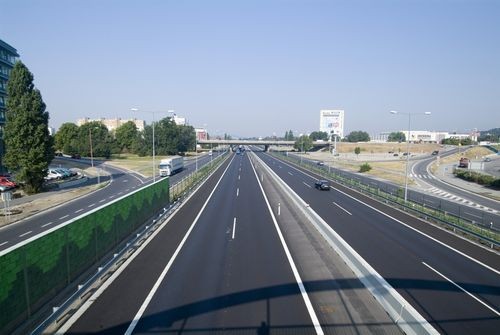
The risk of building-up (delayed supply of construction, ignorance of defined parameters, additional costs, technical troubles, negative impacts to surrounding), of accessibility (outputs not supplied in agreed amount and quality) and of demand or market risk respectively (investment product is not used according to project assumption – for example adequate number of cars do not drive on the motorway) belong among risks defined by Eurostat.
The process of risk management involves several following steps: identification (how and which risks rise, what causes them, how to limit their impact), evaluation and allocation between public and private sector, handling, continual monitoring and checking.
Balance between own capital and debt sources
The measure of allocated risk is needed to judge according to, what is expected from private and public sector. The PPP projects have to bring satisfactory social, economical or other non-user advantages. In spite many foreigners’ experiences speak about several advantages of providing infrastructure projects though PPP, estimations of costs are calculated very complicatedly. It means that each saving depend on consensus between relatively low initial costs and relatively high future costs and on the measure, by which future costs are recalculated to current values.
Coming from logical reasoning of S. J. Bailey, as to which private companies and consortiums will have interest in cash flows only, which they will get from capital investments incurred, it is suitable to point out other relations.
- The degree of financial lever (ratio of total assets and own capital) can become one of key risk factors from private sector side. There, where services are financed exclusively from a debt, financial risk of loses grows, as longer the interval of the payment of interests instalments is (20–25 years) and as higher the real rate of interest is, the more financial risk of lost is involved. Private companies can buy equity shares in case of own assets by which the risk would be assigned to shareholders, to whom low or no dividends obtaining would threat, or they would suffer capital lost eventually in the form of decreased sales value of their shares.
- For decreasing the risk marketable infrastructure obligations should be used alternatively with possibility that the tax relief would be used to encourage this form of financing.
- The entrepreneur depends on cash flow there, where infrastructure assets will be assigned to public sector – however, after some time horizont the length of trading licence brings expenditures for building repairs as well as maintenance, by which total revenue is reduced and risk increases. Too short lasting trade licence can cause, that off taken road toll (in case of motorway or bridge operating) is too high, what can have negative impact to real using its traffic infrastructure.
To strengthen bounds on regional and municipal level
In spite we suppose implicitly, that effective allocation of risk between both partners will contribute to higher value, there still rise several key questions yet. One of them is, how to measure risk and how its value will affect quality of final investment decisions. It can be assumed, that the risk will increase social value of the PPP project, whereas all interested objects will have positive tendency to risk and the risk will present property for them with positive value.
The need to identify weak places and causes of partnerships underestimation in practice of regional and municipal policy appears at the same time and based on it identification of factors and tools, which would strengthen economic bounds of private and public sector on these levels. However, in case of the PPP projects covered form of a debt behind not anytime transparent conditions can concern it under some circumstances – through protection of business secret of private subjects.
The author acts at the Cathedra of public administration and regional development of the National economy faculty of the Economic University in Bratislava. The contribution, which is the component part of granted project VEGA „Possibilities of using public-private partnership while realizing regional policy of the municipal self administration“,was modified and shorten by an editor.
Illustrative pictures – NDS