

Slezská Ostrava has multiple faces
In spite of the ongoing global economic crisis, Ostrava’s biggest city district called Slezská Ostrava continues building flats at a surprising rate. “This year alone, there should be over 250 new flats. On the other hand, more than 200 flats built in the last three years are still vacant,” says Antonín Maštalíř, Mayor in Slezská Ostrava. Is it caused by a lack of money, a lack of interest in housing in this location, or simply by the fact that some property development projects are not interesting? The participants of the recent seminar, organized by Stavební fórum in the Silesian Gallery in Slezská Ostrava’s city hall, tried to answer those questions, along with other questions.
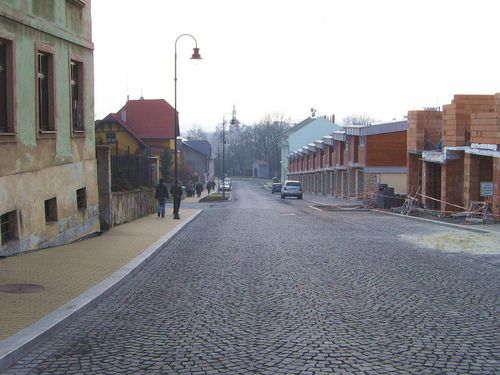
On the one hand chemical plants, dumps, waste piles generated by hundreds of years of mining and metallurgy, sludge beds, hundreds of scattered vents that remove methane from underground shafts, dilapidated colonies with hundreds of “inadaptable” people… On the other hand locations with a view of Ostrava’s historical centre, considered by locals as the most lucrative and luxurious places for living. This is Slezská Ostrava – Ostrava’s district with clearly the largest area (41 square kilometres) and with the 4th biggest population – 21,000 residents.
Housing construction continues
“123 flats should grow this year in Heřmanice and a hundred flats on Sazečská and Vilová Streets. I know of two projects for which we should have sold land for construction, but both investors withdrew their offers because of a lack of finance. Otherwise, construction activities go on; I think the crisis has not stopped anything, only slightly slowed down the immense construction boom,” says Hana Heráková, Vice Mayoress in Slezská Ostrava. Another large project – Behind the Old Power Plant – is also planned, with 83 new flats. “Right now the project is in a stage when our citizens’ suggestions are being processed,” said Vít Svoboda, of City Invest Ostrava.
Another topical “housing” issue is the Bazaly football stadium, where the football team Baník Ostrava stages its competition games. Based on one of the studies, up to 450 new flats should grow there. “If a football stadium is built in Svinov, which is a very topical suggestion, I will be very happy. The train station is close for the fans and the whole relocation could generally alleviate the situation before and after the matches in the city,” said the Mayor.
The city’s management has ambitious plans as regards Slezská Ostrava’s centre. “There are many plans. One of them places the future centre in the vicinity of the Sikora Bridge – the centres of Ostrava and Slezská Ostrava would be in that case connected only by a bridge over Ostravice. Another place that could act as a business centre is the site of the former Petr Bezruč Mine, owned by Diamo. A square on a hill, that would be unique. However, the implementation of these projects would be set against the horizon of decades,” the Mayor adds. But it is not only projects close to Ostrava’s centre that are interesting for housing purposes. “Fifteen years ago there was zero interest in flats in certain locations, while today they are the most lucrative places with a huge demand for them. This trend will continue, people will find their place even in other locations of our district,” said Vladimír Cigánek, representative of Slezská Ostrava’s city hall.
Not every property developer succeeded
Right now there are over 200 vacant flats in Slezská Ostrava. The participants in the discussion altercated whether this was caused by the economic crisis or insufficient money among people. Or if the property developers simply miscalculated and undertook projects in unattractive locations. It is obvious for a statement by Pavel Bednář, of the Ostrava University, some new buildings are occupied only at 40% and it is not going to get better. “Slezská Ostrava is a district with the most polarized groups of citizens. There are the richest people in Ostrava, but also the poorest ones. These are two completely separate towns,” he said, adding: “The effect of the economic crisis may be bad, but I would rather tend to think that people are choosier than in the past and carefully think what they buy. This puts increased demands on property developers.”
Slezská Ostrava has a very rugged terrain, absolutely unique in Ostrava. “There is a reason why one of the locations is called Ostrava’s Barrandov. The best land has been already sold. However, the city’s representative want to check the developers’ plans more than any time in the past, and have therefore set up the Economic Development Commission. The investors are not always sensitive enough to the denizens and the existing development,” says Mayor Maštalíř. People are interested in living in places where you have the whole of Ostrava within your reach, but there is no infrastructure. “The property developer is selling flats but somehow forgot that you need to park somewhere, that there are no shops around, no leisure time activities. They leave all of this on the shoulders of the city,” the Vice Mayoress added.
Heaps, waste piles and sludge beds
 Old environmental loads, brownfields… Slezská
Ostrava has tons of them, including Hrušov, Antošovice, Koblov, huge areas
after the former chemical plant or the Petr Bezruč Mine site. A large portion
of the land is owned by Diamo and RPG – the city
district’s representatives are negotiating with them intensely. “I don’t
see old environmental loads as a problem. You have to look ahead. When the
necessary reclamation and infrastructure is finished, the vast free area will be
highly lucrative. If not for living, they will be great as zones for light
industrial production, leisure time activities, parking lots etc.,” Slezská
Ostrava’s Mayor said at SF’s meeting. The district would like to use state
support and even offers original ideas to solve the issue of brownfields: for
example the waste pile in Heřmanice is currently used for the construction of
motorways in Poland.
Old environmental loads, brownfields… Slezská
Ostrava has tons of them, including Hrušov, Antošovice, Koblov, huge areas
after the former chemical plant or the Petr Bezruč Mine site. A large portion
of the land is owned by Diamo and RPG – the city
district’s representatives are negotiating with them intensely. “I don’t
see old environmental loads as a problem. You have to look ahead. When the
necessary reclamation and infrastructure is finished, the vast free area will be
highly lucrative. If not for living, they will be great as zones for light
industrial production, leisure time activities, parking lots etc.,” Slezská
Ostrava’s Mayor said at SF’s meeting. The district would like to use state
support and even offers original ideas to solve the issue of brownfields: for
example the waste pile in Heřmanice is currently used for the construction of
motorways in Poland.
Will Hrušov become a PPP project?
A large portion of the discussion seminar focused on the development area of Hrušov. “It is a huge problem, since the area is a drainless basin. It is necessary to reclaim and elevate it and to fit equipment for water removal, as needed,” said Jan Dvořák, Ostrava’s representative. According to him, the cheapest variant of reconstruction would cost 300 million crowns. If infrastructure and networks are included, the cost is one billion crowns.
The land consolidation process is currently underway in Hrušov – the land is in the hands of multiple entities and individuals. RPG and 17 other companies are working on a project to bring together private and public sector. “Hrušov could become a huge PPP project,” said Marcela Tomášková, of RPG Real Estate, pointing at the problems with speculations. “I wouldn’t be afraid of land profiteers. It is possible to convert Hrušov into a public beneficial location or to mark it as an area for reclamation, which would distinctly limit their possibilities,” Vladimír Cigánek added.
There are many plans for Hrušov. One of them involves the construction of a large transformer station, which will help solve the unfavourable situation with insufficient power supply for Slezská Ostrava as well as for the whole city of Ostrava. Another potential project involves a new municipal waste incinerator. “I wouldn’t be against. Today’s incinerators are super-modern, environmental facilities, which I learned on my visit to Switzerland. I’m a big fan if this efficient solution to Neruda’s question: Where to put it?” Slezská Ostrava’s Mayor added.
 Jagg.cz
 Linkuj.cz
 Google Bookmarks
 Live bookmarks
 Digg
Digg Del.icio.us
 MySpace
 Facebook